

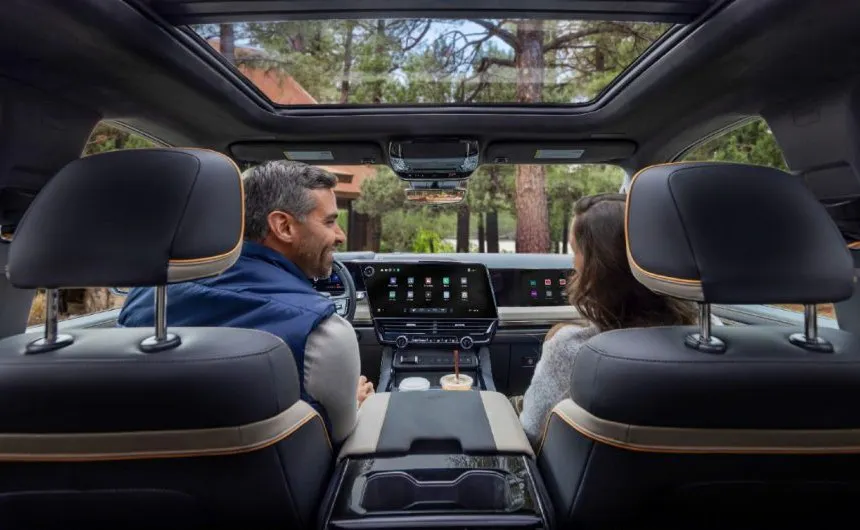
New User Interface Debuting on Chevy Pickup Trucks
General Motors has officially unveiled a state-of-the-art user interface designed to transform the cabin experience of modern pickups. Debuting first on high-volume models—led by the 2027 Chevrolet Silverado—this tech overhaul combines cutting-edge display hardware, intuitive software layouts, and deep artificial intelligence integration. Built as a unified, scalable platform, this new Chevy infotainment software will power electric, gas, and diesel-powered GM trucks alike, setting a new benchmark for in-vehicle technology.
Simple, Clean Visualization Built Around Driver Feedback
Infotainment design often gets bogged down in nested menus, but GM’s next-generation system prioritizes clarity and instant access. The cabin layout centers around high-contrast display hardware that delivers deeper blacks, richer colors, and enhanced visual depth across navigation, vehicle telemetry, and media controls.
A newly reimagined multi-view home screen provides a default split-view design. Drivers can keep a large, interactive map open on one side while monitoring trailering metrics, fuel efficiency data, or media playback right next to it. Furthermore, the digital driver display features mode-aware cluster layouts that adapt dynamically to driving tasks like off-roading, towing, or engaging driver-assist features. When using available Super Cruise technology, the instrument cluster renders a next-generation 3D visualization showing real-time lane markings, surrounding vehicles, and road objects with crisp spatial accuracy.
Intuitive Access, Minimal Distraction, and Seamless Smartphone Integration
Keeping driver focus on the road is central to the design of the new Chevy truck user interface. Hands-free activation is streamlined so drivers can engage Adaptive Cruise Control or Super Cruise with a single button press. Quick-access settings for climate, audio, and camera feeds remain right where drivers expect them, with a one-tap Quick Access menu keeping secondary settings organized without cluttering the screen. Key physical controls also remain intact for drivers who prefer tactile feedback.
To reduce distraction, incoming calls and text notifications no longer overtake the full screen. Instead, they appear non-intrusively, leaving a small call timer at the top of the display so navigation stays active. Drivers who rely on mobile integration will appreciate updated Apple CarPlay and Android Auto compatibility. Rather than taking over the entire dash, smartphone apps now run seamlessly within a large card window alongside native Chevrolet trailering and vehicle status utilities.
Software Engineered for Real-World Truck Capability
For heavy-duty and light-duty truck owners, tech is only as good as its real-world utility on the job site or campsite. GM’s software is built directly around demanding truck tasks. The user interface automatically adapts the moment a trailer is hitched, generating dedicated towing metrics in the driver cluster and a trailering card on the main touchscreen.
Navigating tight spaces and rough terrain is easier than ever with specialized camera systems. Drivers can utilize a dedicated Hitch View camera to align the ball hitch without a spotter, while underbody camera views and off-road performance panels make negotiating obstacles straightforward. For pre-trip safety, complete trailer light checks—including turn signals, brake lights, and running lights—can be initiated directly from a mobile phone, eliminating the need to walk back and forth.
Built-In Google Apps, OnStar, and Passenger Entertainment
Beyond vehicle controls, the system embeds built-in Google capabilities, featuring Google Gemini, Google Maps, and direct access to Google Play apps alongside native OnStar features.
Front passengers get an upgrade as well: an expanding suite of entertainment apps—including YouTube, Disney+, Hulu, Amazon Music, and DIRECTV—can be streamed on an integrated front-passenger display. Thanks to advanced polarized screen technology, passenger content remains completely invisible to the driver while the truck is in motion. Best of all, because the platform relies on a software-defined architecture, continuous over-the-air (OTA) updates will deliver new features, refined layouts, and performance enhancements throughout the vehicle’s lifecycle.
